Thanksgiving School Activities From Circle Time to Civics
Posted by Kate White
The best Thanksgiving school activities fit the time you have and the age of your students. Younger kids do best with short, hands-on activities like counting games and gratitude circles. Older students get more out of history, research and service projects. Below you'll find ideas sorted by grade, each with an estimate of how long it takes.
Thanksgiving week is short and full. Kids are excited, schedules shift, and half the class may leave early on Wednesday. These ideas are built for that week. Most need simple supplies, and many can fill 20 minutes or a full class period, depending on how deep you go.
Thanksgiving Activities for Preschool and Kindergarten
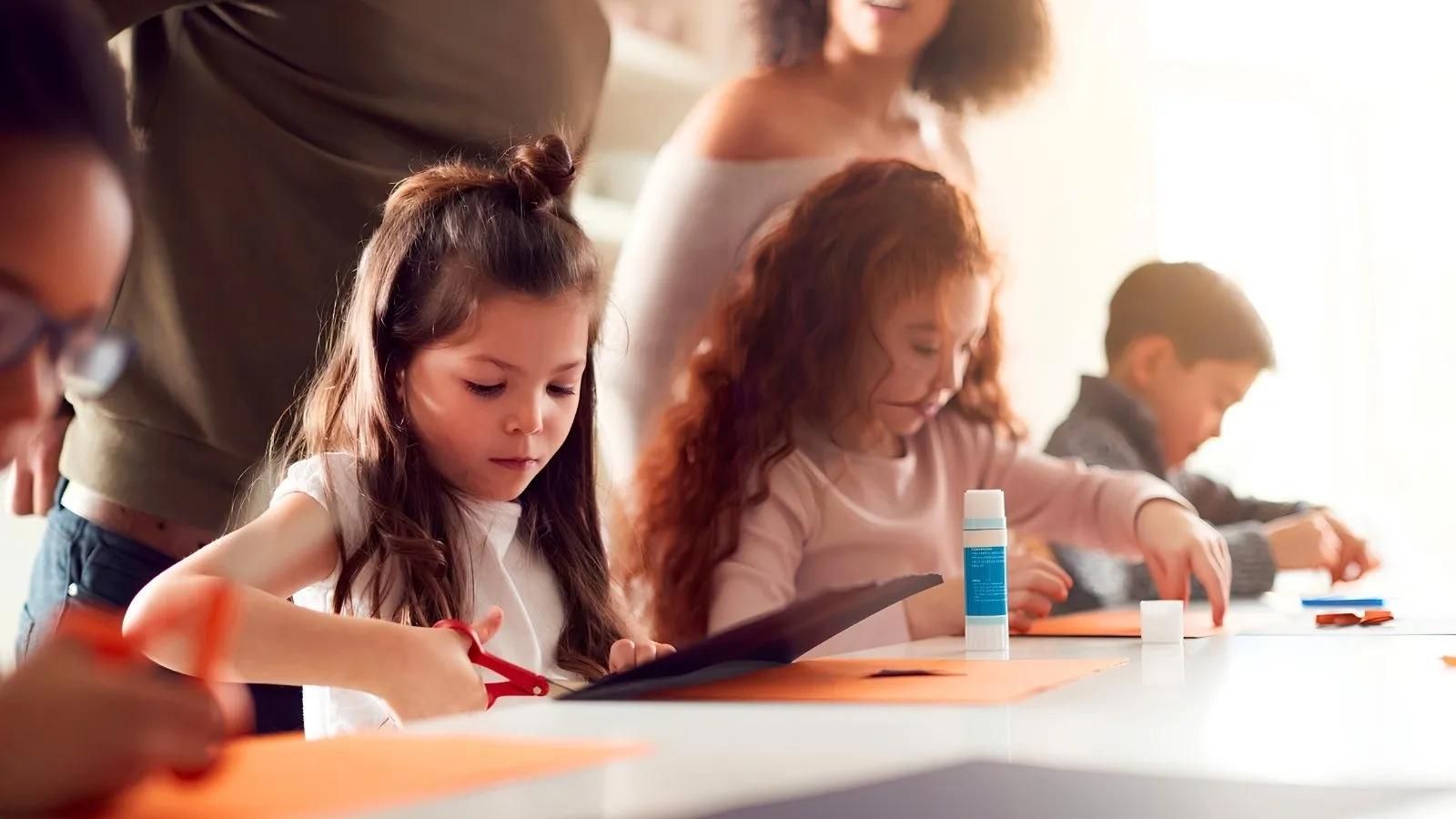
Young kids learn best by touching, moving and talking. Keep each activity to 15 or 20 minutes, and plan a quick movement break between them. These ideas build early math, fine motor and language skills while still feeling like a party.
Activity
What Kids Practice
Time
Roll a turkey
Counting and number recognition. Kids roll a die and add that many paper feathers to a turkey body.
15 min
Harvest sensory bin
Fine motor skills and describing words. Fill a bin with mini pumpkins, pinecones, large corn cobs and scoops.
20 min
Fall sorting tray
Sorting by color, size and shape using leaves, gourds and pinecones.
15 min
Talking pumpkin gratitude circle
Speaking and listening. Whoever holds the small pumpkin shares one thing they're thankful for.
10 min
Corn cob painting
Grip strength and color mixing. Kids roll dried corn cobs through paint to make textured prints.
20 min
Turkey says
Following directions. Play it like Simon Says with moves like "waddle," "gobble" and "flap your wings."
10 min
For the sensory bin, skip small dried beans and loose corn kernels with this age group. They're a choking risk. Larger items like mini gourds and whole cobs work just as well and are easier to clean up.
Picture books make a good bridge between activities. Choose books by Native authors that show Native families today, not just in the past. That helps young kids learn that Native people are part of their community now.
For toddler classrooms and home daycares, use the same ideas in shorter rounds. Five minutes of turkey feather counting or pumpkin rolling is plenty for two- and three-year-olds.
Thanksgiving Activities for Elementary Students
Elementary students can handle longer projects and enjoy activities that connect to what they're already learning. Each idea below fits a specific subject, so you can keep your lesson plans on track during a short week.
Writing
How to cook a turkey. Ask students to write step-by-step directions for cooking a turkey with no help from a grown-up. Their guesses about time and temperature are always funny, and the activity teaches sequence words like first, next and last. Collect the pages into a class book to share with families. (30 min)
Thank-you notes to school staff. Students write a short note to someone who helps the school run, like a custodian, bus driver or cafeteria worker. Deliver the notes as a class. This turns gratitude into action and gives kids practice with friendly letter format. (30 min)
Persuasive pie debate. Students pick the one pie that should be the class's official Thanksgiving pie. Each writes three reasons, then reads them aloud before a class vote. (40 min)
Math
Recipe scaling. Give students a simple recipe for eight people and ask them to change it to serve 24, or the whole class. It's real-world practice with multiplication and fractions. (30 min)
Grocery flyer budget. Hand out a store flyer and a budget, like $60. Students plan a Thanksgiving meal for six and add up the cost. Older students can calculate tax or compare unit prices. (45 min)
Class pie graph. Survey the class on favorite Thanksgiving foods, then build a bar graph or pie chart together. Younger grades can use tally marks. (20 min)
Science and STEM
Cranberry bounce and float test. Fresh cranberries have small air pockets inside, which is why they bounce and float. Students test how cranberries act in water compared to raisins and grapes, then cut one open to look at the air pockets. Farmers use this when they flood bogs to harvest cranberries. (30 min)
Mayflower boat challenge. The Mayflower carried 102 passengers. Students build small boats from foil or paper and test how many pennies each holds before it sinks. Let them redesign and test again. (45 min)
Corn and seed study. Compare different kinds of corn, like popcorn, sweet corn and dried flint corn. Talk about how corn was grown by Native people for thousands of years and how it's grown today. (30 min)
Social Studies
Teach the 1621 harvest celebration accurately. The English colonists arrived in 1620 on land that was home to the Wampanoag people. In 1621, the colonists held a harvest celebration. About 90 Wampanoag men, led by Ousamequin (also called Massasoit), joined them for about three days. The Wampanoag brought deer. Most of what we know comes from a short letter written by one colonist, Edward Winslow. Have students compare that simple account to a common picture-book version and talk about what's different.
November is also Native American Heritage Month. Plimoth Patuxet Museums and the Smithsonian's National Museum of the American Indian both share free classroom resources written with Native educators. These are a good place to start a lesson.
Harvest festivals around the world. Many cultures hold a harvest festival. Groups can research one and share a short poster or presentation. Good choices include Chuseok in Korea, Sukkot in Jewish communities, the Mid-Autumn Festival in China and Vietnam, Pongal in South India and Homowo in Ghana. (Two class periods)
Gratitude
Gratitude tree. Cut out paper leaves and have students write one thing they're thankful for on each. Add them to a paper tree on the wall throughout November. By Thanksgiving week, the tree is full. (10 min a day)
Gratitude interview. Students ask a family member what they're most thankful for this year and what they were thankful for at their age. They share the answers with the class the next day. (Homework plus 15 min in class)
Thanksgiving Activities for Middle and High School Students
Older students are ready to question the story, look at sources and connect the holiday to real issues. These activities work as a full class period or as a short project that runs through the week.
Primary source investigation. Students read Edward Winslow's 1621 letter, which describes the harvest celebration in just a few sentences. Then they compare it to a modern textbook or ad. Ask: what details were added later, and why? (One class period)
The year Thanksgiving moved. In 1939, President Franklin Roosevelt moved Thanksgiving a week earlier to give stores a longer shopping season. Some states went along with it, and others didn't. For two years, Americans celebrated on different days. Congress settled it in 1941 by making the fourth Thursday in November the official holiday. Students can debate whether a president should be able to change a holiday. (One class period)
How Thanksgiving became a national holiday. Sarah Josepha Hale, a magazine editor, wrote letters to presidents for years asking for a national Thanksgiving. President Lincoln made it official in 1863, during the Civil War. Students can read part of Lincoln's proclamation and discuss why he chose that moment. (One class period)
Family meal budget. Groups plan a Thanksgiving dinner for a family of six on a set budget using real grocery prices from a store website. Then they compare their totals and talk about how families with less money plan holiday meals. (One to two class periods)
Food insecurity project. Students research how many families in your county face food insecurity and what local food banks need. They can present findings to younger grades or use them to plan a school food drive. (One week)
Family tradition podcast. Students interview a family member about a holiday tradition and record a short audio clip. Play a few clips in class or share them on the school's morning announcements. (One week, mostly at home)
How to Plan a Thanksgiving Class Party
A Thanksgiving class party doesn't need to be big. An hour with a few stations, a simple snack and one or two games is plenty for most elementary classrooms. Plan early, because the room parent who planned Halloween is often still catching their breath.
Organize your volunteers easily.
If your festivities call for parent volunteers, use a sign up to organize it all. Even better...use our Class Party Sign Up Template to quickly get it created and sent to parents.
Pick games that work in a crowded classroom without much setup.
Pass the pumpkin. Play it like hot potato with a small pumpkin and holiday music. When the music stops, the student holding the pumpkin answers a gratitude question.
Thanksgiving four corners. Label each corner with a food: turkey, pie, stuffing and cranberries. Students move to a corner when the music stops, and the caller picks a corner to sit out.
Feather relay. Teams carry a paper feather on a spoon across the room and back without dropping it.
Gobble freeze dance. Students dance until the music stops, then freeze in their best turkey pose.
Schedule and Stations
A simple schedule keeps the party calm. Here's a sample for a 60-minute party:
Time
What Happens
Who Leads It
0 to 10 min
Settle in, then the teacher explains the stations.
Teacher
10 to 40 min
Three 10-minute stations: a craft, a game and a gratitude or story station.
One parent volunteer per station
40 to 50 min
Snack time at desks.
Snack volunteers
50 to 60 min
A whole-class game, then cleanup.
Teacher and all volunteers
Split the class into three groups and rotate them through the stations. That keeps every station small enough for one volunteer to manage.
Food, Allergies and Volunteers
Start with your school's food policy. Many schools only allow store-bought snacks with ingredient labels, and some don't allow food at all. Understand the restrictions before making a purchase.
Check for allergies before you send the snack list. Nut-free is a common rule, but ask about dairy, gluten and other allergies too. If even one student can't eat the main snack, plan a safe option that everyone can share. Non-food treats, like stickers or a small fall craft kit, also work well.
Fill four kinds of volunteer roles: station leaders, snack helpers, setup and cleanup, and a photographer if the school allows photos. Parents who can't come during the school day can still help by sending supplies.
Two weeks before
One week before
The day before
Party day
After the party
School-Wide Thanksgiving Events
School-wide events bring every grade together before the break. They take more planning than a class party, so start three to four weeks ahead and share the work across classes and staff.
Thanksgiving Spirit Week Ideas
A short Thanksgiving spirit week works well in the days before break. Keep the dress-up ideas simple so every family can join in without buying anything.
Cozy day. Students wear flannel, sweaters or fuzzy socks.
Team colors day. Students wear jerseys or colors from their favorite team, a nod to Thanksgiving football.
Gratitude tag day. Each student wears a paper tag naming something they're thankful for.
Favorite side dish day. Students dress in the colors of their favorite Thanksgiving food, like orange for sweet potatoes or red for cranberry sauce.
Pajama day. A relaxed finish on the last day before break.
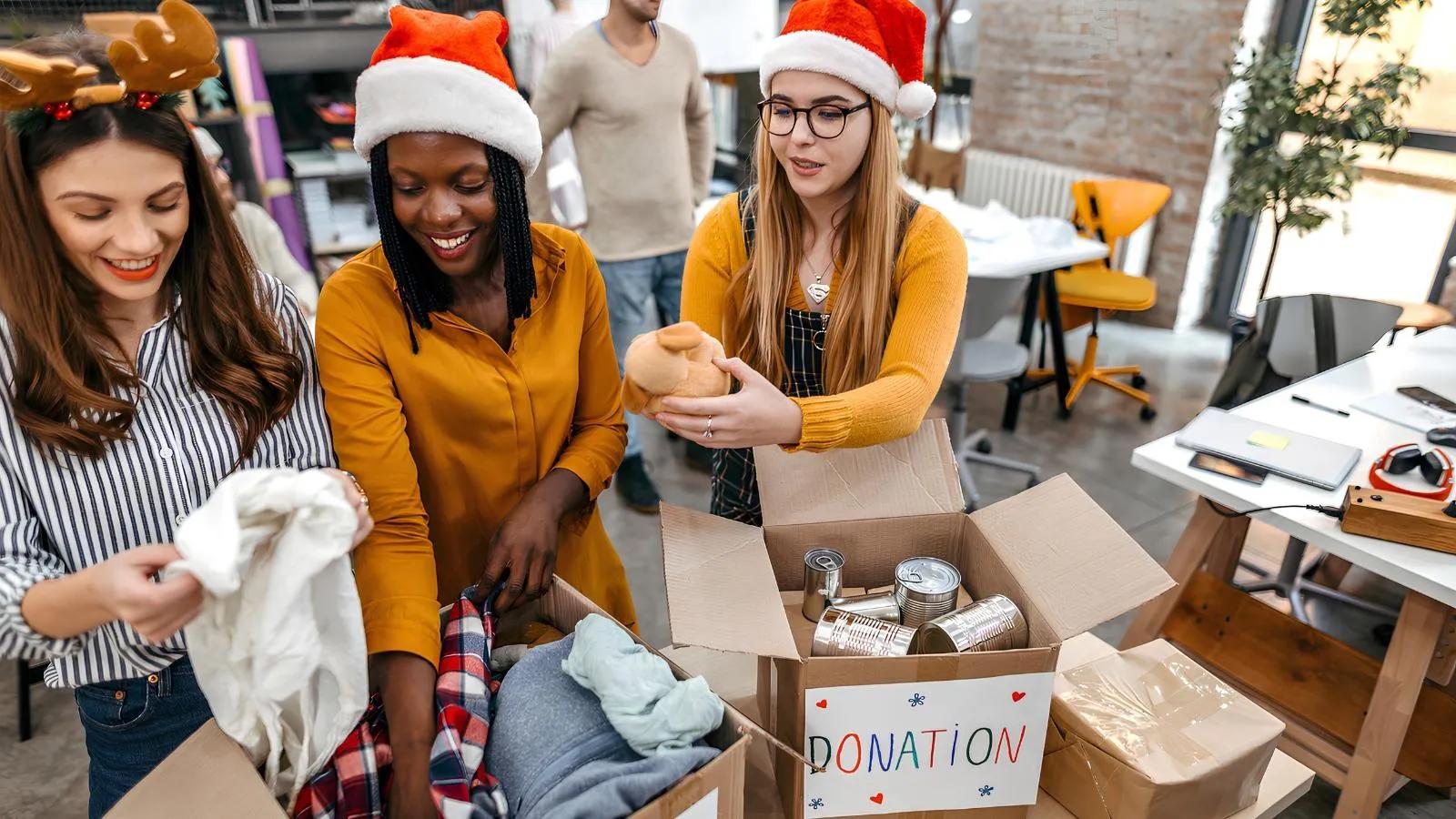
A food drive is one of the easiest ways for a school to give back at Thanksgiving. Call your local food bank first and ask what they need most. Many food banks are short on items like peanut butter, canned protein and cooking oil, not just canned vegetables.
Run the drive for one to two weeks. A friendly competition between classes or grades helps. Post a chart in the hallway and update it each morning. Students can count, sort and pack the donations, which adds a math and service lesson to the drive.
👉 Add an online option to your food drive
Many food banks can buy more food with a cash gift than families can buy at the store. With SignUpGenius Fundraisers, you can set a goal, share one link with families and show a progress bar as gifts come in. Run it alongside your canned food drive so every family has a way to help.
A gratitude assembly gives every grade a part. Younger classes can sing a song or show their gratitude tree. Older students can read thank-you letters to staff or share their research on harvest festivals. Close with a short staff appreciation moment.
A family feast invites families to eat lunch with students. Schedule it by grade so the cafeteria isn't overcrowded, and ask families to RSVP so the kitchen can plan. Keep it simple with a shared meal, a short student performance and time to visit classrooms.
Get your festivities organized.
Collect volunteers, snacks and RSVPs from one link, with automatic reminders so nothing gets missed. SignUpGenius helps you get organized for free.
I'm a kindergarten teacher. What Thanksgiving activity can I do in 20 minutes?
Try roll a turkey. Each child rolls a die and adds that many paper feathers to a turkey body. It practices counting and number recognition with almost no prep. Corn cob painting and a talking pumpkin gratitude circle also fit in 20 minutes or less.
How do I teach the history of Thanksgiving accurately to young kids?
Keep it simple and true. Explain that the Wampanoag people lived on the land long before the English colonists arrived, and that both groups shared a harvest meal in 1621. Use picture books by Native authors, and skip costumes like paper headdresses. Plimoth Patuxet Museums offers free classroom resources.
What are good Thanksgiving activities for middle school students?
Middle schoolers enjoy activities that question the story. Try comparing Edward Winslow's 1621 letter to a modern version, debating the year Roosevelt moved Thanksgiving or planning a family meal on a budget. A food insecurity research project can also lead into a school food drive.
How do I plan a Thanksgiving class party when some kids have food allergies?
Ask the teacher for allergy information and the school's food policy before you plan anything. Choose store-bought snacks with labels, and plan one safe option the whole class can eat. A SignUpGenius sign up lets you list exact snack items, so parents know what to bring.
How do I get more parents to help with our Thanksgiving class party?
Send one sign up with specific roles and time slots, like a 10-minute craft station or bringing napkins. Small, clear tasks are easier to say yes to. Include ways to help from home, and use SignUpGenius automatic reminders so volunteers don't forget.
Can our school sell tickets to a family Thanksgiving feast?
Yes. With SignUpGenius Events, you can sell tickets, set a capacity limit for the cafeteria and collect details like dietary needs in one step. Families get QR code tickets by email. If the feast is free, a sign up works well for RSVPs and food assignments.
What are easy Thanksgiving spirit week ideas for school?
Keep themes simple so every family can join in. Cozy day, team colors day, gratitude tag day, favorite side dish day and pajama day all use clothes students already have. Run the week in the days right before Thanksgiving break.
Thanksgiving Potluck Sign Up Sheet
Plan a classroom feast with a slot plan, a free template, and automatic reminders for parents.
I'm a huge fan of SignUpGenius and have been able to accomplish so much with it. It's always quick to load and easy to use. I have used SignupGenius to coordinate hundreds of volunteers, and it's always easy and reliable for both me and them. Thank you for your wonderful product!
 Posted by Kate White